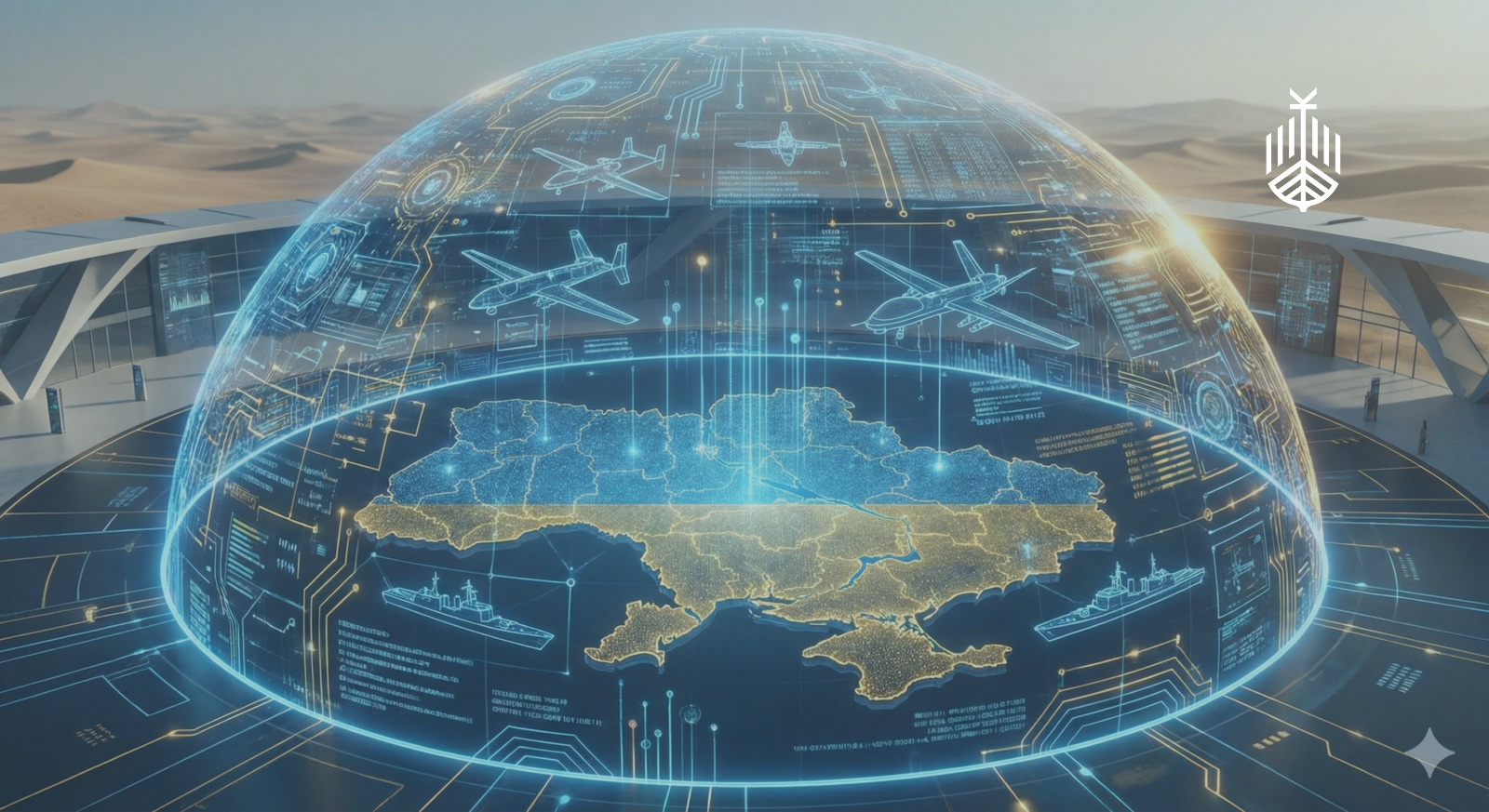
What will be the next defence technology revolution?
How will climate change affect defence?
Are there ethical limits to technology change?
These are amongst the questions addressed in the NATO Science and Technology Organization’s recently published S&T Trends 2025-2045. This document is public and is available at NATO_STO_Science_and_Technology_Trends_2025_2045_Volume_1_English.pdf. The document is aimed at defence leadership to provide them with a non-technical overview of how technology trends in the next 20 years will impact strategic decision making in defence matters.
The report identifies six “macro-trends” which are judged to determine the likely evolution of technology over the next 20 years. These are: evolving competition areas; the race for AI and Quantum superiority; the biotechnology revolution; the resource divide; fragmenting public trust; and technology integration and dependencies. Each of these six macro-trends is given a high-level analysis for their implications for leadership readers.
The trend on evolving competition areas notes that S&T advances will transform the nature of competition, both in traditional and non-traditional domains – for example, cyber, space, and hybrid, and in geographical regions such as the High North. The report sets out a series of key judgements regarding this trend:
• New technologies offer leaders a spectrum of strategic choices to be made now to ensure that NATO is fit for the future operating environment;
• There will be geopolitical competition for the lead in critical technology areas;
• The continued hybridisation of warfare has made shock tactics such as economic coercion more likely, and has heightened the importance of cyber and space domains in future contests and conflicts.
This trend will also provide choices for leadership. As global strategic competition intensifies, unpredictability and uncertainty are also on the rise, making it difficult to anticipate which shocks to prepare for and when. Decision-makers will benefit from considering multiple future scenarios, possibly using advanced immersive simulation and modelling opportunities to understand better the choices available. However, no matter the future contest or conflict scenario, it is clear that traditional notions of deterrence and escalation must adapt to the increasingly technology-dependent defence environment. Leadership will also need to address the growing importance of space. Although all military domains rely on technology, the fundamental dependence on space assets represents a crucial vulnerability that is increasing over time. Leaders should consider options for building resilience and responding to future tensions.
The importance of the Artificial Intelligence and Quantum domains is well-recognised, but the report brings out conclusions that are not always well understood. In particular:
• Talent acquisition, training, and retention will be a key battleground for technology competition;
• Like-minded nations will need to pool expertise and resources to win this race.
Despite their different stages of development, significant advancements are expected in both AI and quantum in the next 20 years, and the unique impacts of each technology area on various sectors will be both wide-ranging and revolutionary.
These technologies are expected to become the fiercest areas of competition over the next two decades. One proactive step that leaders can consider is the development of a national quantum strategy, as the UK did in 2023. Allies could also consider greater S&T collaboration in AI and quantum. Given the complexity and pace of development of these technologies, pooling resources among likeminded nations is the only way for Allies to be ahead in the competition for technology leadership. Allies should therefore examine ways to enhance S&T collaboration with NATO partners. The NATO Science and Technology Organization has particularly strong relations with Australia, Japan, New Zealand, and the Republic of Korea. Leadership will also need to consider the trade-offs involved in the race to achieve and maintain AI and quantum superiority. Further AI and quantum advancement will only be achievable if access to large quantities of quality data can be assured. At the same time, future AI- and quantum-related processing will require an enormous amount of energy.
The report states clearly that the next revolutionary technology cycle will be driven by developments in synthetic biology. This goes well beyond the medical advances that we are already seeing and identifies emerging issues such as biodata and biosensors as new areas of future development. In the defence and security arena these developments will also require like-minded Allies to bring forward regulation relating to the safeguarding and protection of sensitive research, as the UK has already done.
The enormous potential benefits of increased biotechnology use as well as its serious risks pose a unique challenge for policymakers, scientists, and industry. An interdisciplinary approach that prioritises international scientific collaboration, safeguarding sensitive research where necessary, will be essential for harnessing the power of synthetic biology advancement. Proactive steps toward achieving responsible progress could be the establishment of global standards for biosafety and ensuring that necessary safeguards are implemented. Broadscale international collaboration will also certainly be needed to ensure the safe and sustainable development of synthetic biology through appropriate ethical, legal, and security oversight.
S&T advancement is often (and correctly) seen as an enabler of economic development via AI-enabled solutions, bio- and green technology, and novel/advanced materials, but it also serves as a driver of a deepening resource divide. Economic resilience and security as well as NATO’s global partnerships will become increasingly crucial in relation to this trend. Technationalism is also expected to be further prioritised by leaders who view technological capability as increasingly integral to economic, societal, and national security needs. The report also highlights that upcoming shocks, especially but not exclusively stemming from climate change, will exacerbate existing tensions between nations that can more easily recover from them and those that cannot.
While global shocks and their precise repercussions are difficult to predict, it is highly likely that climate related migration, and conflict will increase in the next 20 years. Preparing for these developments will require action on multiple fronts. In response to these trends, Allies need to consider engaging in technology diplomacy in order to develop norms and bridge growing resource divides. This could involve international collaboration on technology development that enables supply chain resilience, enhances recyclability, or encourages the use of novel materials as substitutes for rare minerals. Denmark’s ‘TechPlomacy’ initiative and Germany’s Strategy for International Digital Policy provide different examples for how nations may get involved. Technology diplomacy and collaboration efforts should also consider that international cooperation on technology norm-setting will become increasingly crucial over the next 20 years.
Fragmenting public trust in science, institutions, and governments is an increasing challenge, especially via AI-generated information threats. As a result, topics such as strategic communications, digital sovereignty, the need for trustworthy S&T solutions, and improved technology education are expected to increase in importance within the next 20 years. The report also highlights that:
• Global leadership is needed to encourage the responsible use of emerging and disruptive technologies;
• Technology, especially AI, is being used to decrease public trust (in governments, institutions, and science), and the future impact of these developments will be further complicated by rising political polarisation;
• In the long-term, tech-fuelled solutions may offer tools for combatting disinformation and misinformation, but in the short term, strategic communications, legal/regulatory mechanisms, and technology education will be increasingly vital.
Research suggests that trust in science, institutions, and governments is highly vulnerable to further fragmentation. In order to confront these challenges, including AI-generated information threats, trustworthy S&T solutions must be pursued. This will likely require substantial investment in advanced AI and LLM tools to monitor, identify, and combat harmful information online, supported by regulation to ensure that monitoring requirements are executed responsibly. Additionally, the need for evidence-based media and technology education, including training in critical thinking, will significantly increase over the next 20 years.
To mitigate the continuing fragmentation of public trust in science and technology, senior leaders should continue prioritising strategic communication efforts, including pre-bunking and de-bunking false narratives. In parallel, senior leaders’ support for responsible use of technology will be essential.
It is also important to recognise that the weaponisation of certain technologies to create misunderstandings and mistruths can be achieved very easily and cheaply. While AI in particular has empowered the rapid spread of misinformation and disinformation, effective disinformation can instil doubt in a targeted audience without presenting a credible story or facts.
Finally, while S&T advancements will continue to provide solutions to complex challenges, it will be vital to address technology integration and inter-dependencies. For Nations with cutting-edge technology, differences in Concepts of Operations and regulation will pose challenges for interoperability and standards, and this will be a key issue for NATO. Meanwhile, as innovation is increasingly driven by the private sector, new challenges for civilian-military integration will emerge, and the long-term effects of increased dependency on S&T across civilian and military domains may bring unexpected consequences.
The report also states that:
• Future S&T capabilities need to be interoperable by design;
• At the same time, new challenges to achieving interoperability will also arise as disparities in technology access, usage, and regulations become more pronounced;
• Economic cooperation is needed with like-minded nations and private sector partners;
• Increasing dependencies on private actors for critical defence needs will become a greater challenge.
These six socio-technical trends will shape the strategic S&T landscape over the next 20 years. They will not only impact scientific collaboration and research agenda but will also affect the NATO’s political decision options, defence capabilities, military operations, and enterprise functions. As S&T is integral to achieving both political and military objectives, building knowledge on these inter-relationships will enable the Alliance to be more strategically prepared and less strategically surprised.
Therefore, the NATO S&T Trends document aims to equip Alliance leadership with evidence-based proposals about long-term military and political imperatives. The overview of linkages between S&T areas and their economic, geopolitical, and social effects and enablers provides a context for understanding the world of today and tomorrow. While some trends and related technology areas are already apparent today, others will take time to fully mature. Nevertheless, the decisions made by senior leaders now will impact the Alliance and its citizens for years to come. Careful consideration of future scenarios and their likely implications will be critical to ensuring that the Alliance will maintain its ability to act and react as these trends continue to unfold.
If you are interested in joining the NATO Science and Technology Organization, please register online or contact your National Coordinator.



.png)


.png)

.jpg)