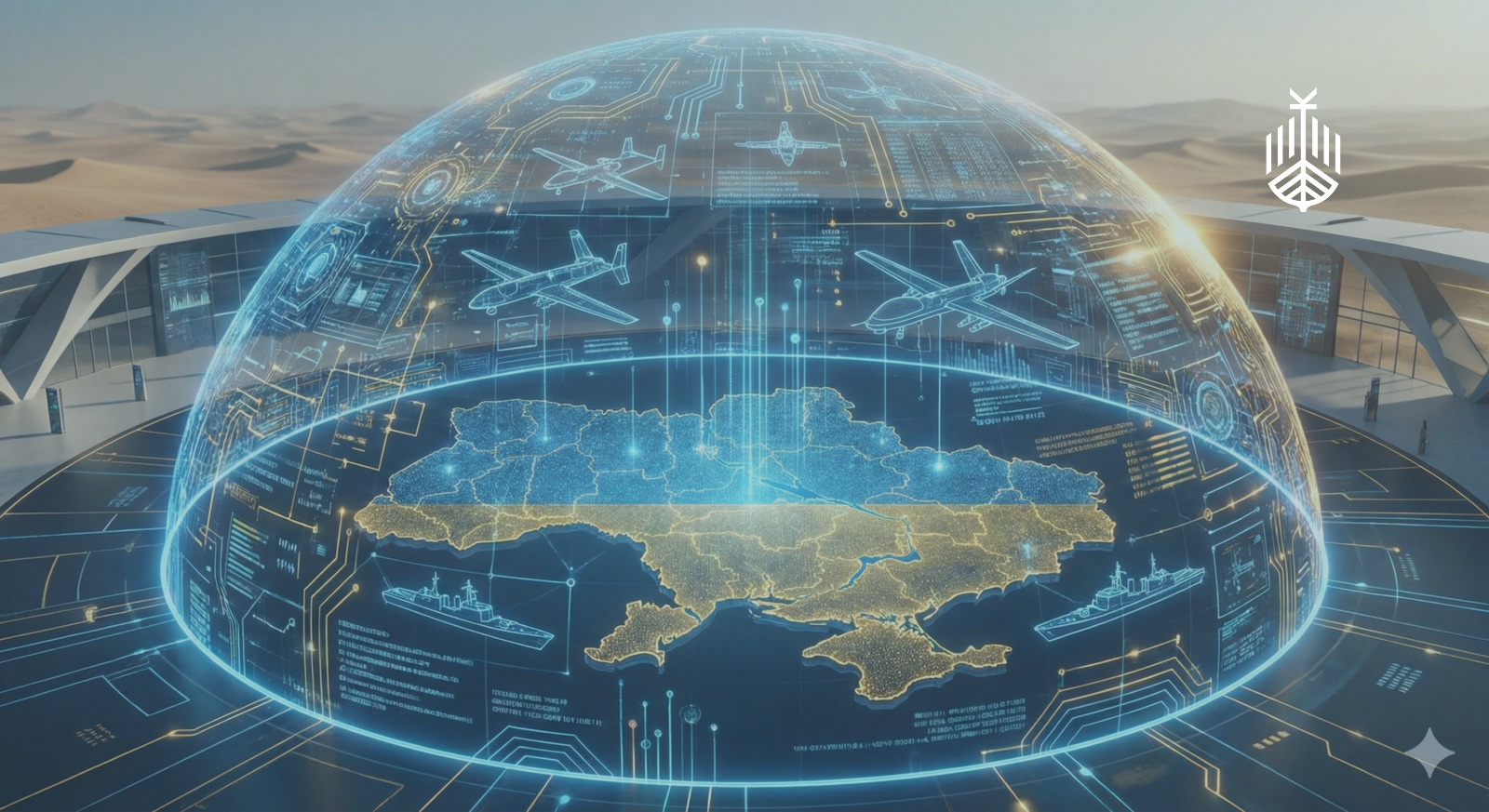
Ukraine has earned the right to be called the world's leading hotspot for defence technology.
Behind its remarkable performance is an innovation cycle driven almost entirely by private initiative.
Defence technology in Ukraine
The scale of Ukraine's technological transformation since 2022 is difficult to overstate. Unmanned systems now account for roughly 80% of combat damage inflicted on Russian forces. A quarter of Army Corps personnel are dedicated to operating them. By 2025, Ukraine had deployed over four million drones. These are not the metrics of a country receiving Western aid and deploying it — they are the output of an entirely different model of military innovation.
A bottom-up revolution
Every major technology-enabled capability Ukraine has fielded originated from private initiative rather than institutional strategy. This bottom-up adoption logic represents a 180-degree inversion of the conventional innovation process found within NATO. While Western defense establishments typically rely on top-down, requirements-driven acquisitions that span years, Ukraine’s model is defined by immediate frontline needs, rapid prototyping, and immediate fielding.
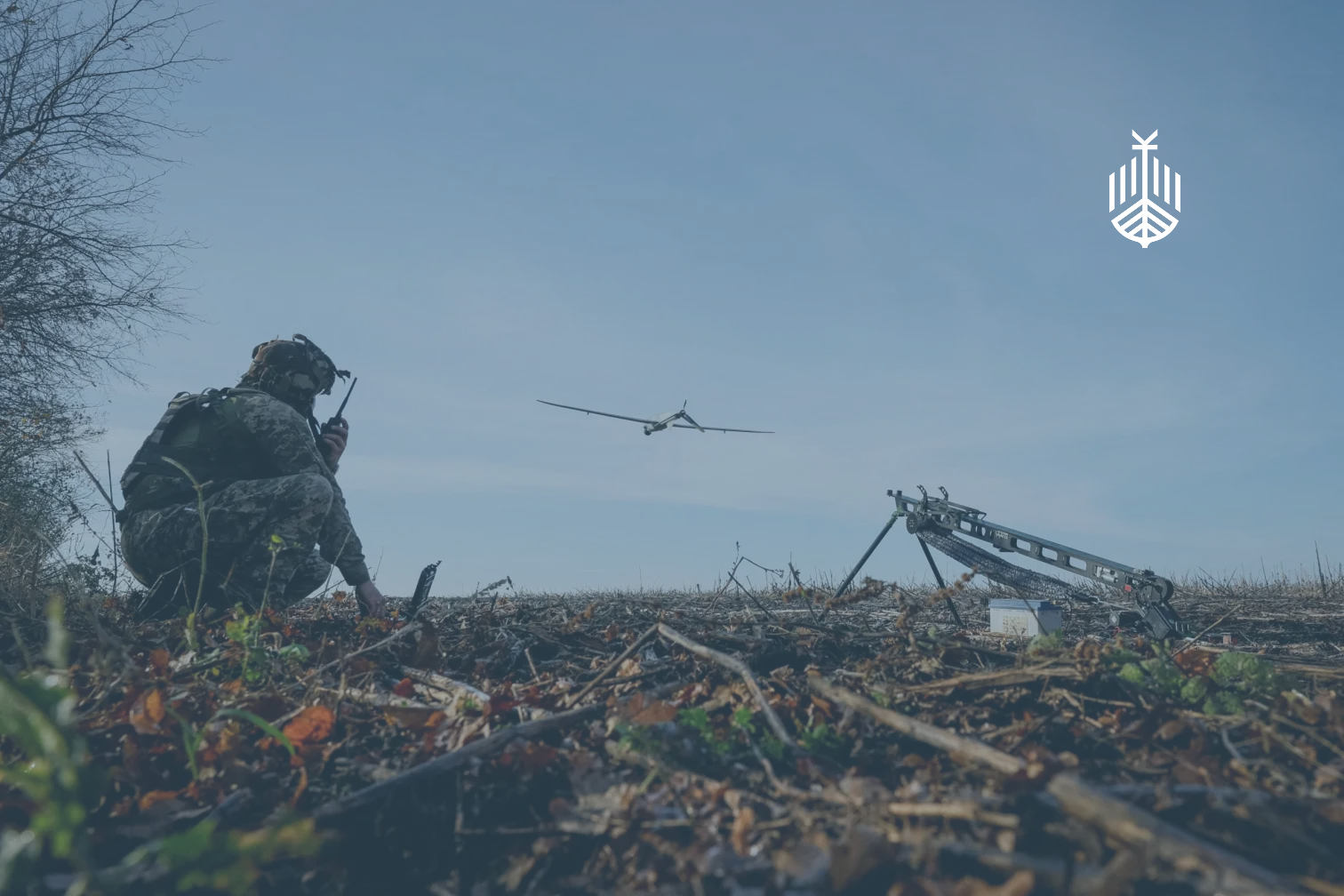
Nobody strategised for FPV drones — yet they effectively replaced artillery as the dominant precision kill tool and made large-scale mechanised manoeuvre prohibitively costly. The tactics for countering Shahed drones were shaped by the development of interceptor drones, not the reverse. The "Baba Yaga" heavy-lift drone — now a serious threat to Russian logistics — was brought to the battlefield by agricultural equipment specialists. Even the closest example of top-down innovation, maritime drones, was developed by private actors in tight partnership with security agencies to maintain operational security. Today, these surface vessels continuously harass the Black Sea Fleet, successfully executing strategic area denial.
The Ukrainian defence innovation cycle
Discovering the problem. Tactical problems surface at the lowest level — directly with warfighters, most of whom are mobilised civilians. Their technical backgrounds and pre-war professional networks give them direct access to engineering expertise, creating immediate, unmediated feedback between the people experiencing a problem and those capable of solving it.
Developing a solution. Solutions are built by soldiers or civilian engineers working in close cooperation with end users, with rapid iteration cycles. Brave1, the government's defence innovation agency, provides grants to reduce financial risk at this stage.
Early adoption. Once a solution proves effective in the field, warfighters and developers begin raising funding for wider deployment. In most cases, early adoption is funded privately — through donations and military-focused charitable foundations. This mechanism has allowed many technologies to cross the valley of death at a moment when the government was not yet prepared to acquire them, whether due to novelty, limited evidence base, or the absence of a regulatory framework. Lead military users adapt their organisational structures informally to absorb new capabilities; some units have created dedicated R&D labs and experimental battalions to run trials with maximum flexibility.
Government capture. As adoption scales, the value of a technology becomes broadly visible — through social media, traditional press, and word-of-mouth across units. The government — usually, though not exclusively, the MoD — removes regulatory barriers and begins procuring at scale.
Indoctrination. Formal doctrine is always the last to move. It responds to mass adoption rather than driving it; TTPs are derived from successful real-world deployment patterns rather than pre-specified requirements.
Private capital as a force multiplier
Private capital plays an enabling role throughout the entire cycle. Beyond donations and charities, local angel investors have provided the early-stage capital needed to get companies operational. Institutional VC investment in Ukrainian defence tech began in earnest in 2023; by 2025 it had grown from $1.1M to an estimated $100M per year (according to UCDI). That figure is modest against NATO-wide defence tech investment — yet the Ukrainian ecosystem has demonstrated exceptional capital efficiency, turning that institutional and angel investment into an $9B+ market for defence technology.
This model enables rapid innovation. Direct feedback loops, operational flexibility and private capital can carry a novel solution from concept to mass adoption within months. The government's preference for capturing proven solutions over shaping the market is occasionally criticised — but it allows the system to move at the pace of innovation rather than the pace of procurement, and to scale what actually works.
The cycle in practice
Military software is the earliest example of grassroots innovation becoming a decisive factor in Ukraine's defence. From 2014, volunteer tech specialists began building a better artillery targeting system — Kropyva — and a situational awareness platform, Delta. Gradually, they found lead users within the army who embedded volunteer developers informally in their units, with volunteers funding their own tables and laptops to expand access to the new digital tools. In 2022, Kropyva drew international media attention for compressing the kill chain from detection to strike to under ten minutes. Delta became the backbone of Ukraine's ISTAR architecture and was formally adopted across the entire force in 2024.
FPV drones are the most prominent demonstration of how the cycle works at speed. The first improvised drones carrying grenades appeared in 2015 but never gained traction. In 2022, recently mobilised civilians with hobbyist FPV experience revisited the concept — and results followed quickly. Footage on social media prompted public donations that funded wider deployment. The Ministry of Digital Transformation deregulated the market and began procuring at scale. Brave1 issued grants for developers of improved radio links, payloads and autonomy systems.
The structural response kept pace. By early 2023, dedicated strike UAV platoons were forming; by mid-2023 they had scaled to companies in every brigade. Six months later, strike UAV battalions were mandated across the force, Ukraine formally established the Unmanned Systems Forces as a dedicated service branch, and by 2025 the first strike drone brigades were forming.
What this means for others
Ukraine's innovation cycle is, in many ways, a product of necessity. Urgency — and specifically war — created the conditions that make it work: compressed feedback loops, tolerance for failure, willingness to experiment, and a technically capable population with a direct personal stake in the outcome. I would not recommend that path to anyone.
But the cycle's outputs are replicable — and accessible. For Western governments and defence companies seeking faster development and validation of new capabilities, the most direct route is partnering with Ukrainian stakeholders: gaining access to an ecosystem that has demonstrated it can take a concept to a battlefield-proven system faster than most procurement processes can process a requirements document.
—
References
UCDI – the Ukrainian Council of Defence Industry – released a VC investment overview in January 2026. https://ucdi.org.ua/en/news-en/investments-in-ukrainian-defence-tech-exceeded-100-million-in-2025-ucdi-investor-club-overview/
Defence tech market size is based on D3’s analysis of multiple sources. This includes the central government budget (~$3.6B), municipal budgets (~$0.4B), charities (~$0.3B) and foreign military aid (International Drone Capability Coalition, Danish model, direct foreign aid; around $5B in total).
Photo Credit: REUTERS/Alina Smutko



.png)


.png)


.jpg)