
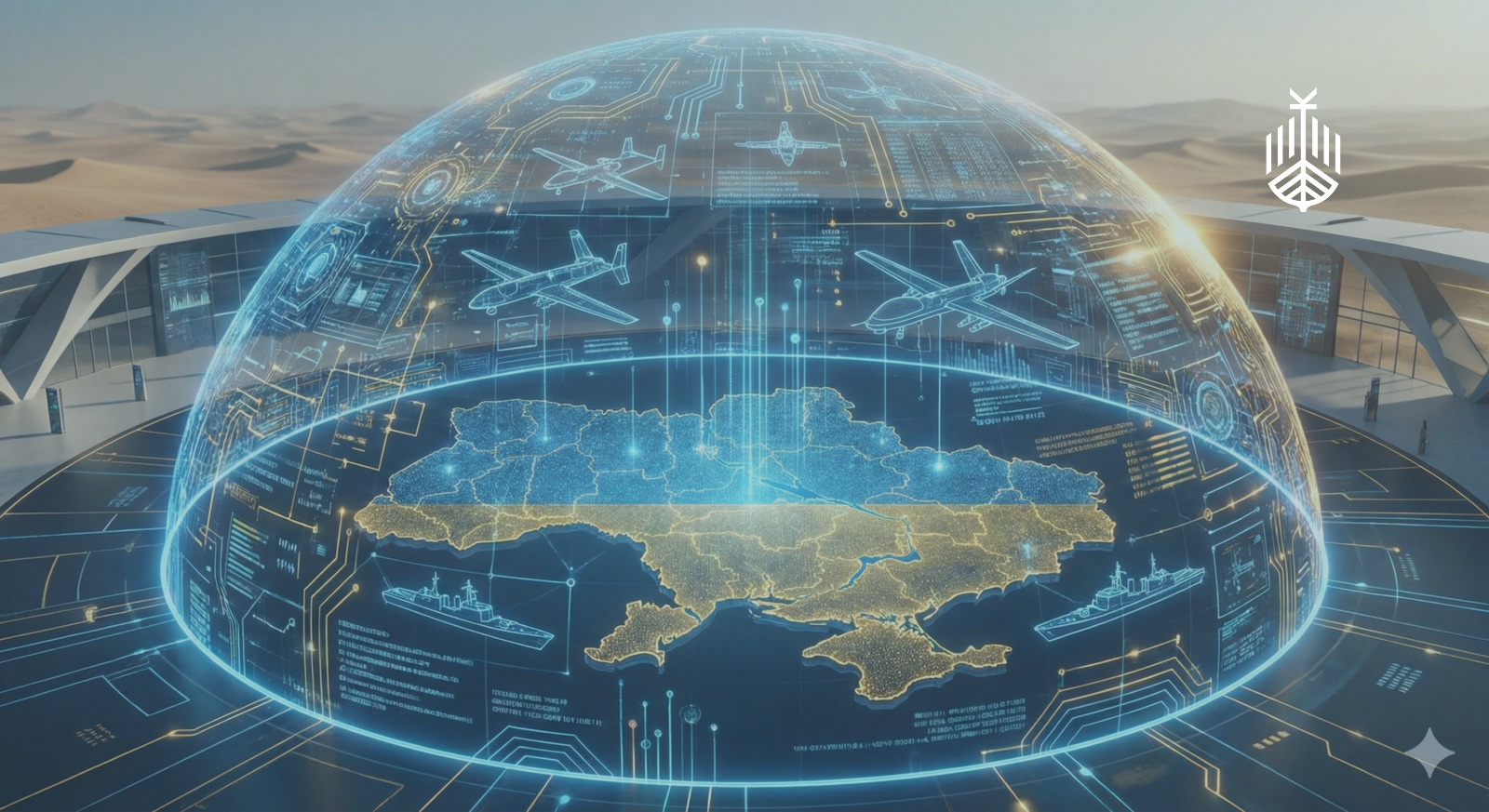
Featued image © TechUkraine
Ukraine’s Formidable Defence Innovation Ecosystem
Since the beginning of Russia’s full-scale invasion in early 2022, Ukraine has developed a formidable defence innovation ecosystem. Ukrainian and international mass media publications and specialised defence outlets have closely tracked this evolution, from the first hobbyist drones adapted for military use to sophisticated solutions across every domain that we see today. Examples include the integration of US-based Shield AI’s Hivemind autonomous control system into Ukrainian drones, design and production the of FP-series Flamingo long-range cruise missiles, and evolution of the naval drone programme to provide air defence and underwater strike functions.
While most of these developments have been achieved during the full-scale war, there are some areas where foundations were laid following Russia’s initial invasion in 2014, and the last four years have seen rapid break-throughs and improvement. One of these cases is the Ukrainian situational awareness and battlespace management system Delta. Having evolved into a comprehensive C4ISR1 system, Delta now features an interactive battlefield map, a drone mission control module, secure battlefield video analysis, AI-enabled enemy asset classification system, and a secure messenger, amongst other functionalities.[1]
Delta relies on a number of intelligence sources (including radar and satellite imagery), is interoperable with NATO equipment (such as the F-16 combat aircraft), and is continuously being improved. What makes Delta illustrative of Ukraine’s approach to defence innovation, however, is its ‘cloud-native’ nature. This allows it to be accessed via an app or a browser using a Starlink terminal anywhere in the field, and represents a break from the traditional military architecture approach of tethering software to physical servers within military sites.
The foundational technologies within Delta may not be ‘new’ themselves, but it is Ukraine’s ability to integrate hitherto disparate threads and apply them in novel ways that is truly innovative. Similarly, a recent commentary for the Royal United Services Institute (RUSI) highlighted Ukraine’s ‘agile integration model’, in which the optimisation of how drone components ‘work together, enables testing, modification and deployment of platforms within weeks.[2]This agility, rather than just traditional invention, is what creates value.
Wartime innovation and war of attrition
All of this has been underpinned by Ukraine’s ‘culture of innovation’, with its focus on grass-roots solutions generated and delivered in ‘the fastest and most efficient way,’ in large part due to direct and close contacts between developers and operators. Ukraine has also been institutionalising and nurturing this innovation.[3]. [4] In 2023, it launched the Brave1 state accelerator and defence technology cluster, initially, as a start-up grant dispersal and go-to-market support institution. The organisation evolved considerably since then, and is today involved in articulating technology priority areas for developers.
Ukraine normalised direct procurement by military units and then introduced the so-called ePoints system, where battlefield data is leveraged to award ‘bonus points’ to units based on their success in destroying enemy targets (verified via Delta). The points can be exchanged for certain categories of equipment, such as drones, electronic warfare systems, and ammunition. An official Brave1 Marketplace provides the interface for this (effectively, a catalogue), while the digitised DOT-Chain system generates documentation and handles logistics. In March 2026, the Ministry of Defence launched the Defence AI Centre of Excellence dedicated to leverage and advance military applications of artificial intelligence, demonstrating that Ukraine is continually pushing for technological advancement. [5]
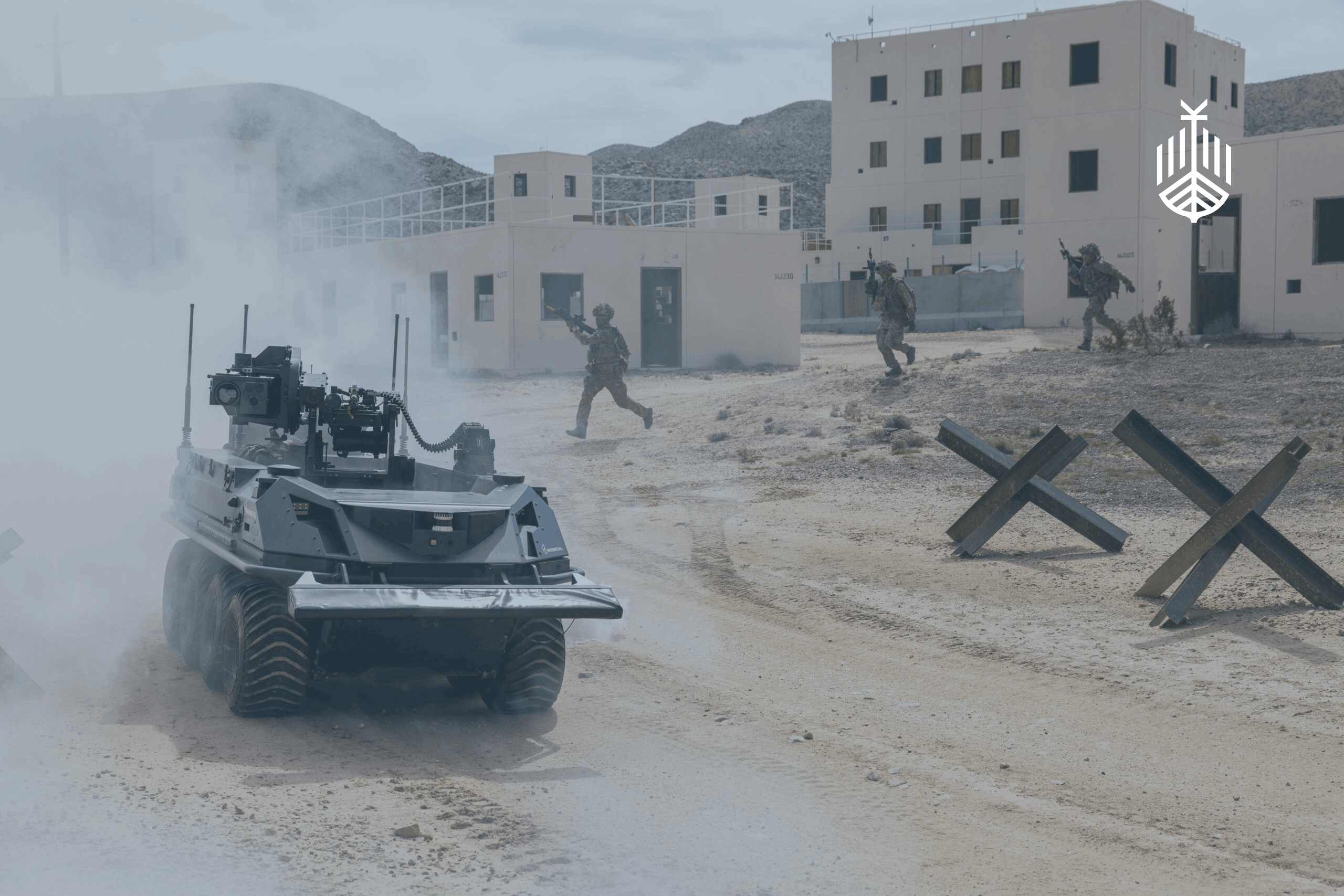
However, as several Ukrainian and international analyses have pointed out, defence innovation alone cannot replace a fully-fledged capability development system, which anticipates requirements and generates the quality and quantity necessary to withstand a long-term war of attrition.[6]. [7] Crucially, rather than just delivering more advanced or simply more platforms, be it uncrewed ground vehicles (UGVs), naval drones, or drone interceptors, a capability approach focuses on delivering effect by integrating equipment, training, logistics, and doctrine – making sure all strands work together and everything ‘speaks’ to each other. Development activity must be similarly guided by the goal of delivering combined effect.
While there are a number of angles through which this argument can be explored, this piece will focus on two – the importance of a formalised, foresight-driven requirements process and interoperability. Addressing gaps in these two areas will go a long way towards embedding the capabilities logic within the innovation-procurement continuum and ensuring that the agility, ingenuity, and inventiveness for which Ukraine is known helps sustain its defence in attritional war.
The importance of formalised, streamlined requirements
One persistent gap lies in the lack of fully-fledged, anticipatory requirement formulation. Currently, innovation and manufacturing heavily relies on developers’ direct contacts with military units. Yuriy Poritskyi, the CEO and founder of UGV developer DevDroid, stated in a recent interview that ‘private conversations with commanders’ can often form the basis of manufacturers’ estimates of needs and quantities. [8]. One the one hand, this type of close communication drives agility, responsiveness, and speed. These are qualities for which the Ukrainian defence innovation ecosystem has rightly been admired since the start of the war.
At the same time, this reactive approach and the lack of a formalised requirements process means that developers and manufacturers are not able to systematically gather the demand foresight necessary to plan several years ahead. This kind of strategic planning by the industrial base – which in Ukraine is defined by its large number of startups – is enabled by disciplined multi-year threat forecasting and capability road-mapping within the Ministry of Defence (MOD) and General Staff. It is also critical for scale and adaptation in a war of attrition, ensuring that innovation feeds the resilience and capacity of the defence industrial base.
The lack of formality in requirements also has drawbacks for the armed forces. Taking unmanned systems as an example – closely associated with Ukraine’s wartime innovation – demonstrates that speed and agility have certain trade-offs. Yaroslav Honchar, co-founder of the civil-military organisation Aerorozvidka, describes this as conscious ‘experiment’ between Ukraine’s government and defence market. [9]. Several bureaucratic barriers were removed in order to expedite procurement and delivery. These included the replacement of MOD-mandated technical specifications during procurement with ‘self-approval’ by manufacturers and acceptance of the manufacturer-issued quality certification without additional state verification. [10]
While these changes led to the emergence of a rich supplier base capable of quickly generating and adapting solutions for the frontline, Honchar argues that they are not yet sufficient to ‘self-correct’ for quality and frontline performance issues if they do arise. This argument is echoed by Yaroslav Kalinin, CEO of the electronic warfare (EW) and signals intelligence (SIGINT) systems developer Infozahyst. [11]. Legally, the manufacturers bear responsibility for their quality certification and specifications statements. Practically, however, wartime reality presents several problems with this approach. The system only catches failure after it occurs on the battlefield, and even then, it is difficult to know where to apportion responsibility – is the drone itself faulty, or did something else cause the issue, such as human error or inadequate selection process? xii
Interoperability and critical ‘connective tissue’
Another by-product of Ukraine’s laser focus on speed of fielding and development, driven by wartime survival, has been the prioritisation of materiel-based solutions, even if it is technologically sophisticated materiel. [12]. As my co-authors and I have noted in a 2025 publication, ‘Ukraine is continuously demonstrating how to field incrementally improved, battle-ready platforms and weapons systems in record time –a better drone, a new jammer,’ but a ensuring that ‘connective tissue’ like logistics, data standards, and communication are in place to integrate this equipment and deliver effect is still a work in progress. [13].
In 2025, Valerii Churkin, then-deputy defence minister, already drew attention to the fragmentation and interoperability issues caused by the ‘more than 600 drone variants’ reportedly in use across units, along with 200 types of drone munitions.[14]. He called for relentless rationalisation, in order to move from ‘hundreds of types, to tens’ and then focus on maximising modularity and interoperability of drones and components, ensuring uniformity ‘in how they are used’ to rapidly scale and maximise effectiveness.
Ukraine is also moving to the next phase of the interoperability challenge, as the Delta ecosystem continues to evolve. Initial issues arising from ‘a diverse ecosystem of sensors, communication links, and battle management tools’ have been addressed through Delta’s transformation into an integration platform with NATO interoperability standards.[15]. During this next phase, however, the Ukrainian ecosystem will need to produce solutions for managing ‘cognitive load’ and ‘information overload’ as a key aspect of battlefield effectiveness, since already today ‘Ukraine processes tens of terabytes of ISR data daily. [16].
Conclusions: the challenge developing a systematic, standardised approach to revolutionary wartime adaptation
Ukraine is not short of innovative, out of the box solutions to persistent challenges. The existing defence procurement norms and systems were not fit for purpose when it came to equipping the armed forces to ensure the country’s survival after Russia’s full-scale invasion. Ukraine leaned on civil society and commercial technologies to develop and deliver military applications directly to the front, bypassing bureaucratic delays and cumbersome procedures.
As the war continued, it was the same organic ecosystem, which now drew in volunteers, armed forces, developers, and government actors like Brave 1, that flagged difficult ‘side-effects’ of speed and decentralisation, including issues with scaling, maintaining advantage, and ensuring quality. Ukraine subsequently developed and then began to standardise ‘workaround’ solutions, such as the ePoints and marketplace systems.Today, Brave1 is attempting to formulate and communicate requirements and feedback to developers, based on front-line performance data. In the first quarter of 2026, Ukraine also began moving towards leveraging the ePoints data for quality and performance verification of the equipment itself, via a type of ‘natural selection’ for best-performing kit. It also began incentivising the achievement of NATO quality assurance and standards milestones.
In sum, Ukraine is not short of awareness of the issues it faces in re-orienting its innovation ecosystem towards a long-term attritional conflict, nor is it shy of introducing creative, even revolutionary, solutions, be it adopting a ‘cloud-native’ C4ISR ecosystem or introducing ‘Amazon for drones.’ In this process, it has upended long-standing norms and received wisdom of defence procurement and innovation, which could be rigid and outdated.
And yet, as this article has highlighted, Ukraine will inevitably face friction and transition issues, as it is forced to respond quickly and efficiently to technological and combat developments on the battlefield as well as position its defence industry, innovation, and acquisition apparatuses for a multi-year war of attrition.
This is where Ukraine’s NATO partners have an important role to play. While it has become somewhat fashionable to criticise NATO processes and structures as cumbersome, bureaucratic, and out of touch with modern warfare, it is important to remember that NATO has spent decades meticulously developing and adapting foundational concepts, doctrine, expertise and methodologies in order to enable tens of disparate military forces to fight together, and industry to sell across borders. Individual NATO members have been through numerous rounds of defence procurement reforms, and while issues undoubtedly remain, they have amassed valuable lessons learned and benefited from exchanges with allies. Now, NATO is grappling with how to transition to wartime cycles of innovation, production, and procurement, while remaining in a peacetime framework.
This is why mutual learning and open exchange can be particularly beneficial to both NATO and Ukraine – not superficial conference roundtables where things remain unsaid, but structured, focused and substantive collaboration programmes. Ukraine needs to preserve agility, expediency and short feedback loops, but also embed threat foresight, strategic planning, and standardisation as it transitions to a capability mindset. NATO struggles with variations of similar tensions, and can help with expertise, technical assistance, and capacity building. It also needs to ensure that it is ready for large-scale and potentially long-term war.
In any case, what emerges will need to be a uniquely Ukrainian variant of rapid capability development – fit for wartime conditions, but also subject to standards, methods, and oversight.
REFERENCES
[1] Tenenbaum, E., et. al. Mapping theMilTech War: Eight Lessons from Ukraine’s Battlefield, 12 February 2026
[2] Niederkofler,M., Drones Win Battles, Components Win Wars, 17 December 2025
[3] Muravska, J., Drones and defenceinnovation in Ukraine: consolidating wartime ingenuity, 29 November 2022
[]Lopatin, et. al., From Culture to System:A Roadmap for Turning Ukraine’s Counterdrone Innovation into a Capability,22 October 2025
[5] Ministryof Defence of Ukraine, Ministry of Defence launches first AIcenter of excellence to advance AI integration in defense, 17 March 2026
[6] Goncharuk, V., Ukraine Isn’t theModel for Winning the Innovation War, 12 August 2025
[7] Prozoro.net, Новий етап війни:Берлінська прогнозує масові атаки автономних дронів, 3 March 2026
[8] Zhakhalov, Y., Не «домогосподарки»,але проблеми є. Що насправді не так з українськоюоборонкою, 3 April 2026
[9] Zhakhalov, Y., Не «домогосподарки»,але проблеми є. Що насправді не так з українськоюоборонкою, 3 April 2026
[10] Ministry of Defence of Ukraine, Ministryof Defence streamlines weapons codification and accelerates the supply of newdevelopments to the military, 2 March 2026
[11] Zhakhalov, Y., Чому обороннікомпанії можуть втратити “вікно можливостей,” 19 August 2025
[121] Zhakhalov, Y., Не «домогосподарки»,але проблеми є. Що насправді не так з українськоюоборонкою, 3 April 2026
[13] Lopatin, et. al., From Culture toSystem: A Roadmap for Turning Ukraine’s Counterdrone Innovation into aCapability, 22 October 2025
[14] DOU.ua,Протидія «Шахедам»буде за кілька місяців. Інтерв’ю із заступником міністра оборониз технологій,26 June 2025
[15] Hoog, B., Mosaic Warfare inUkraine, 2 April 2026
[16] Tenenbaum,E., et. al. Mapping the MilTech War: Eight Lessons from Ukraine’sBattlefield, 12 February 2026



.png)


.png)


.jpg)